Why consumer hardware fails in horticulture
Kennis
July 15, 2026
Miranda van Tellingen
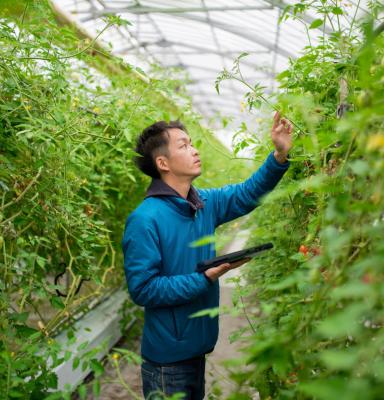

The harsh reality of the farm environment
Conditions in the agricultural sector are extreme. Equipment is exposed daily to mud, fine dust, vibrations from agricultural machinery, and significant temperature fluctuations—for example, when moving in and out of cold storage facilities. Consumer devices are simply not designed for these environments.
Even with a protective case, condensation, dust ingress, or a drop onto a concrete floor can quickly result in device failure. The result is operational downtime, frustrated employees, and data that is not synchronized in time. In addition, the lifecycle of consumer-grade devices is short: after two years, a model is often no longer available, leaving you with a fragmented fleet of different phones and chargers.
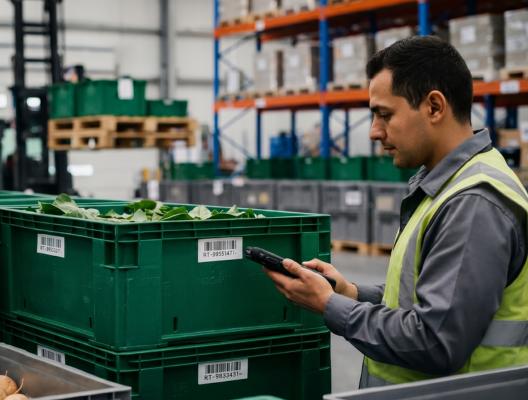
What makes enterprise hardware different?
Enterprise hardware, such as industrial barcode scanners, rugged PDAs, and tablets from brands like Zebra or Honeywell, is designed from the ground up for heavy-duty industrial environments.
- Extremely rugged (IP-rated): These devices are fully dust- and waterproof. They can easily withstand repeated drops onto concrete and can even be rinsed under running water.
- Integrated barcode scanners: Instead of unreliable camera-based scanning, enterprise devices feature a professional scan engine. This allows them to scan thousands of barcodes per day in a fraction of a second, even when labels are damaged, dirty, or wet.
- Long lifecycle and continuity: Enterprise hardware manufacturers guarantee device and component availability (such as batteries) for up to 5–10 years after product introduction. This ensures stability and consistency in IT management.
- Replaceable batteries: Running out of power during a long harvest day? With enterprise hardware, you can swap in a fully charged battery within seconds—without needing to connect the device to a charger.

Sustainable and more cost-rffective through circular IT
The main barrier to adopting enterprise hardware is often the initial purchase price, which is understandably higher than that of a consumer smartphone. However, when looking at the Total Cost of Ownership (the total costs over the entire lifecycle), enterprise hardware is significantly more cost-effective in the long run. While a consumer smartphone used intensively in agriculture is often worn out after just 1.5 years, an enterprise device can easily last 5 to 7 years.
This is where the power of circular IT comes into play. By choosing professionally refurbished enterprise hardware, you combine the best of both worlds. You benefit from the rugged, industrial-grade quality of enterprise devices, but at a price comparable to consumer-grade equipment. In addition, this approach aligns perfectly with the growing demand for sustainable practices in the agri supply chain, as it directly reduces both e-waste and CO₂ emissions.

Always operational with professional management
In the agricultural sector, uptime is critical. A malfunctioning system during harvest or peak periods directly leads to logistical delays and a decline in the quality of fresh produce. With enterprise hardware, supported by proactive Mobile Device Management (MDM) and a specialized service partner, this risk is minimized. Devices are updated and secured remotely, and in the event of a failure, they are immediately replaced with a fully operational unit.
Conclusion: Stop risking your critical business data on vulnerable consumer smartphones. Enterprise hardware provides the reliability and performance that the modern agricultural sector demands.
Curious how the combination of rugged enterprise hardware and smart device management forms the foundation of a future-proof agricultural business? Download the whitepaper on digital transformation.