The importance of rugged tablets for forklifts
Kennis
April 16, 2026
Miranda van Tellingen
Why rugged tablets are essential on forklifts
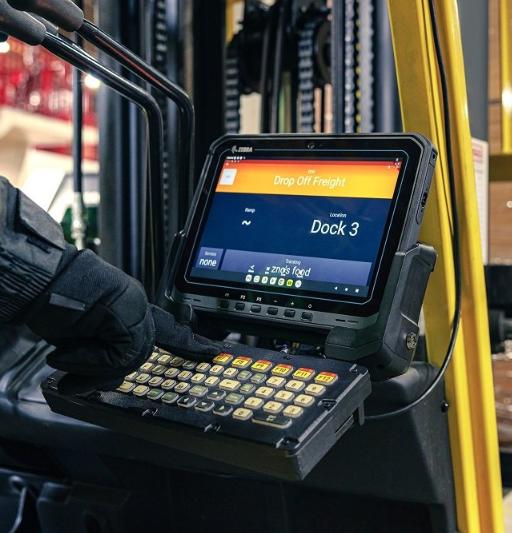
In modern warehouses and production facilities, forklifts are indispensable. At the same time, operators increasingly rely on digital systems such as WMS software and real-time data updates.
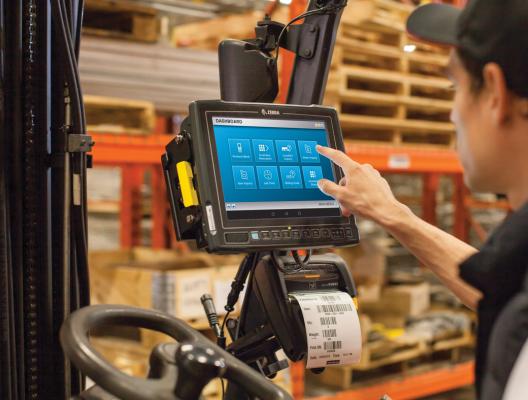
Rugged tablets mounted directly on the forklift enable operators to:
- Process orders immediately
- Update inventory in real time
- Navigate safely without paper lists
By choosing rugged hardware, your operations keep running smoothly, even under demanding conditions.

Key features
Not every tablet is suitable for forklift mounting. Pay attention to the following features:
- Shock and drop resistant: can withstand vibrations, impacts, and harsh conditions
- Bright display: easily readable in bright light or outdoor environments
- Long-lasting battery: lasts an entire shift without charging
- Connectivity: real-time synchronization with WMS/ERP via Wi-Fi or mobile network
- Easy operation: touchscreens work even with gloves and in dusty conditions
Examples of suitable devices: Zebra ET56 and ET51 are widely used industrial tablets, but there are other rugged options that can fit your warehouse processes.

Benefits of tablets on forklifts
Greater Efficiency
Operators have immediate access to all the information they need. Orders and inventory can be processed instantly, making work faster and more accurate.
Improved Safety
Tablets on the forklift replace loose devices and paper lists that can be distracting while driving. Employees can fully focus on their surroundings and tasks.
Real-Time Data
Inventory and orders are updated in the system immediately. Errors caused by manual entry are significantly reduced.
Durability
Rugged tablets are built to last for years, even under harsh conditions such as vibrations, dust, and impacts.

Tips for a successful implementation
Mount the tablet in a sturdy holder so it remains stable while driving, but can be easily removed or repositioned when needed. Train operators thoroughly on both the hardware and software, well-trained employees work faster and make fewer mistakes.
Preferably start with a pilot in a single warehouse zone to optimize workflow before rolling out on a larger scale. Additionally, use Mobile Device Management (MDM) for centralized management, updates, and security, ensuring all tablets remain safe and up to date.