The forgotten link: how mobile device management completes your TMS
Kennis
December 8, 2025
Miranda van Tellingen

Van aannames naar realtime inzicht
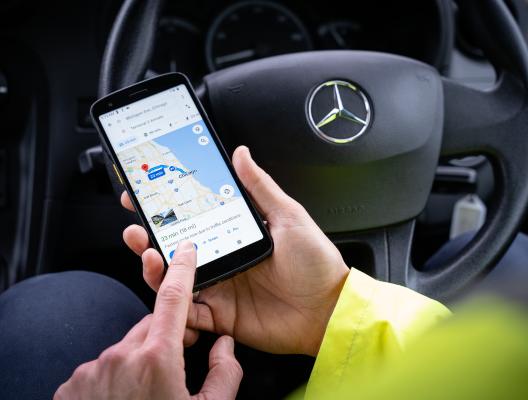
Drivers often encounter various obstacles on the road, such as traffic jams, waiting times at loading and unloading locations, or last-minute changes from customers. Without properly connected mobile devices, this information often reaches the TMS too late - or not at all. As a result, planners have to operate based on assumptions, even though they would prefer real-time updates, without being entirely dependent on calls with drivers.
This strikes at the heart of business operations: delivery reliability, efficiency, and customer satisfaction. That’s why the need is growing to view the mobile layer—smartphones, tablets, and scanners—not as separate from the TMS, but as an integral part of the system.
Why integration often stalls
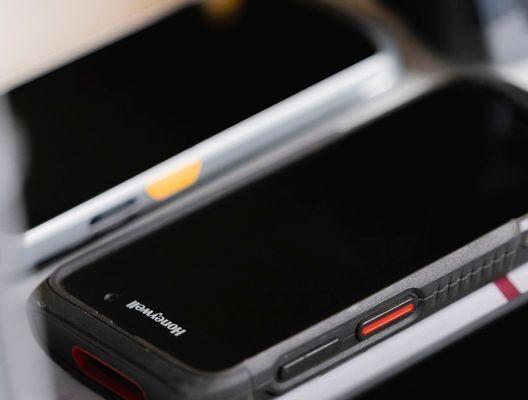
In many transport companies, drivers still use a variety of devices: personal phones, different brands and versions of Android, and a range of settings.
This makes uniform integration with the TMS complex. Additionally, TMS providers often keep their software deliberately generic. They build features that are relevant to most customers, while specific requirements, such as integration with sensor data or customer-specific forms, rarely rank high on the priority list.
Understandably, many TMS providers optimize for features that serve the largest group of customers. With an MDM-driven device layer, however, your company retains control: you can connect exactly the apps, sensors, and data fields your operation needs, without waiting for the next major TMS release. The result is greater agility and independence within an environment that would otherwise be quite rigid.

From device visibility to end-to-end supply chain insight
Mobile Device Management (MDM) makes it possible to bridge that gap. By centrally managing and monitoring devices, transport companies gain control over the mobile layer of their operations. They can roll out updates in a controlled way, standardize settings, and remotely lock or wipe devices in case of loss. Platforms like SOTI MobiControl and SOTI XSight go even further. They enable real-time monitoring of device activity, from battery status and network coverage to app usage on the road. This ensures not only technical management but also continuity of the operational process.
Real-time device insights also have value beyond internal operations. If drivers consistently experience outages in certain regions, XSight shows this clearly. This becomes a decisive advantage in discussions with telecom providers, who may give the “green light” based on coverage maps, while your data clearly shows orange or red zones. MDM thus becomes an objective basis for negotiations with suppliers.
With solutions like Live View, a planner can see all drivers on a single map, including status information and load details. The real benefit, however, comes when location data is enriched with business information. For example, in refrigerated transport, temperature sensors in trailers can be monitored live and linked to order and batch data. The planner can see in one view where the driver is, the condition of the cargo, and which shipment is at risk, allowing immediate adjustments based on that information.

The operational profits
By structurally integrating mobile devices into the TMS ecosystem, an information flow emerges that goes far beyond planning and execution alone. Drivers work with reliable, standardized equipment, while planners have access to real-time data. Customers gain visibility into the status of their shipment without anyone having to follow up by phone. The result is less downtime, greater control, and higher customer satisfaction. A TMS disconnected from the mobile reality provides only half the picture.
By viewing Mobile Device Management as an integral part of transport management, companies gain control not only over their technology but also over their entire operation.