Barcode scanners for efficient operations
Barcode scanners make it possible to identify products, goods, and items quickly and accurately. They are used for inventory management, order picking, goods receiving, point-of-sale applications, and production processes. Reverse IT helps organizations select a barcode scanner that matches their application, working environment, and operational processes. From compact scanners for retail and front-desk use to rugged scanners for warehouses, logistics, and manufacturing.
Advice on barcode scanners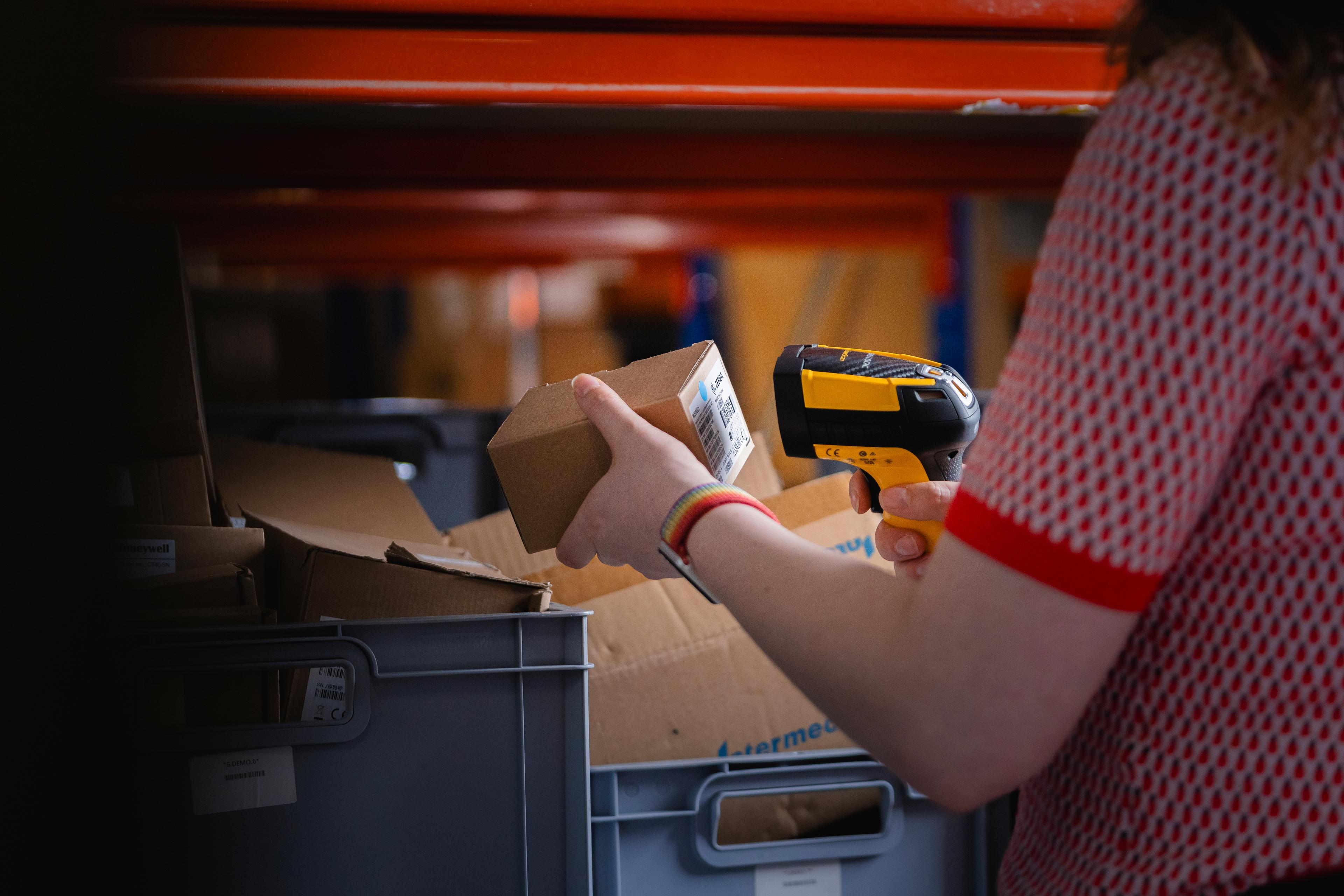
Barcode scanners for different applications
A barcode scanner is an integral part of daily operations. The right scanner depends on what you scan, where you scan, and how intensively the scanner is used.
Barcode scanners are commonly used for:
- Inventory management and stocktaking
- Order picking
- Goods receiving
- Packing and shipping
- Retail and point-of-sale
- Production and quality control
- Transportation and distribution
- Product identification and registration
By scanning barcodes directly, data can be recorded quickly and digitally. This reduces manual data entry and helps employees process information directly within the systems they use.
Which barcode scanner fits your organisation?
There are different types of barcode scanners. The most suitable solution depends on the application, scanning frequency, working environment, and barcode type.
Handheld scanners
There are different types of barcode scanners. The most suitable solution depends on the application, scanning frequency, working environment, and barcode type.
Wireless barcode scanners
A wireless scanner offers greater freedom of movement than a wired scanner. This is useful when employees need to move around a workstation, warehouse, or shop floor while scanning.
Wired barcode scanners
Wired scanners are suitable for fixed workstations where mobility is less important. They are often used at counters, cash registers, and fixed scanning stations.s.
Industrial barcode scanners
Ideal for applications that require a larger screen. Commonly used in manufacturing, logistics, and other demanding work environments.
Wearable mobile computers
Warehouses, distribution centers, and production environments often require rugged scanners. These devices are designed for intensive daily use and, depending on the model, offer increased resistance to drops, dust, and moisture.
Hands-free (wearalbe) scanners
For applications where products are scanned rapidly one after another, a hands-free or presentation scanner may be the right choice. The scanner remains in a fixed position while employees move products past it.
Long-Range barcode scanners
When barcodes need to be scanned from greater distances, such as on high warehouse racks, a scanner with extended scanning range can be beneficial.
Scanning 1D and 2D Barcodes
Not all barcodes are the same. One important consideration is the type of barcode you need to scan.
- 1D-barcodes
Lineaire barcodes consist of a series of vertical lines. They are widely used for product identification and traditional barcode processes. - 2D-barcodes
2D barcodes, such as QR codes and Data Matrix codes, store information in two dimensions. They can contain more information and are increasingly used across various business processes.
Many modern barcode scanners can read both 1D and 2D barcodes. Always verify which barcode types are used within your organization before selecting a scanner.
What should you consider when choosing a barcode scanner?
The right scanner is determined by more than just price or brand. Consider the conditions in which the scanner will be used.
Scanning range
Will employees scan barcodes at close range or from a distance? For warehouses with high shelving, a long-range scanner may be relevant.
Barcode type
Make sure the scanner supports the barcode types used within your organization, such as 1D, 2D, QR, or Data Matrix codes.
Connectivity
In warehouse or production environments, a rugged scanner may be required. Consider factors such as drop resistance and IP rating
Working environment
Screen size, glove-friendly operation, and usability under different working conditions can all influence the choice of device.
Wired or Wireless
For fixed workstations, a wired scanner can be practical. If employees frequently move around, a wireless scanner provides greater flexibility.
Scanning frequency
Occasional use requires different features than applications where employees perform hundreds or thousands of scans throughout the workday.
Ergonomics
Weight, grip, and ease of operation are important when employees use scanners for extended periods.
Connectivity and integration
The scanner must be compatible with the computer, point-of-sale system, mobile computer, or application used within the organization.
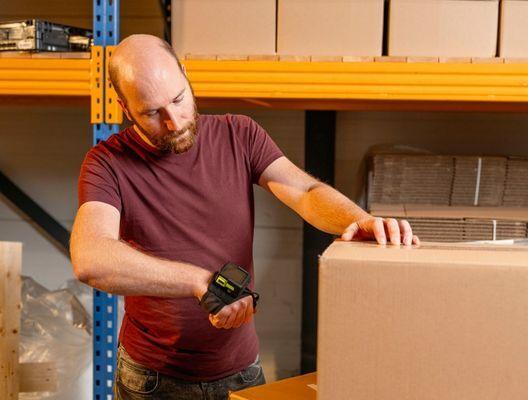
Barcode scanners from Zebra, Honeywell, and Datalogic
Reverse IT supplies professional barcode scanners from Zebra, Honeywell and Datalogic.
These manufacturers offer a wide range of scanners for different applications, from compact handheld scanners for fixed workstations to rugged solutions for warehouses, logistics, and manufacturing.
The most suitable scanner is determined not only by the brand, but also by the application, barcode type, scanning distance, working environment, and preferred workflow.

Barcode scanners and mobile computers
A barcode scanner can be used as a standalone device or as part of a mobile solution, for example:
- Barcode scanner + mobile computer
For order picking, inventory management, and goods receiving. - Barcode scanner + tablet
For applications that require both scanning and additional on-screen information. - Barcode scanner + fixed workstation
For goods receiving, production environments, or front-desk operations.
The combination of hardware and software ultimately determines how scanned information is processed within the organization.

From scanner to complete solution
A barcode scanner is rarely a standalone solution. It must fit seamlessly into the processes and systems that use the scanned information. Reverse IT considers factors such as:
- Barcode type
- Scanning distance
- Working environment
- Number of scans per day
- Wired or wireless connectivity
- Existing hardware
- Business applications
- WMS or ERP integration
- Accessories and charging solutions
- Service and support
This approach ensures that not only the right scanner is selected, but also that it is effectively integrated into daily operations.
Frequently Asked Questions about barcode scanners
What is a barcode scanner?
A barcode scanner is a device that optically reads a barcode and converts it into digital information. The scanned data can then be processed by a connected computer, mobile computer, point-of-sale system, or business application.
What is the difference between a 1D and a 2D barcode scanner?
A 1D scanner is designed for linear barcodes. A 2D imager can read both 1D barcodes and 2D codes such as QR codes and Data Matrix codes. The required scanner depends on the barcode types used within your organization.
Which barcode scanner is suitable for a warehouse?
That depends on the application. A wired scanner may be suitable for fixed workstations, while wireless or rugged scanners are often better suited for order picking and other mobile tasks. For high warehouse racks, a long-range scanner may be beneficial.
Which barcode scanner is suitable for intensive use?
For intensive use, factors such as ergonomics, scanning performance, battery life (for wireless models), and durability are important. Industrial scanners are often suitable for warehouse and production environments.
Can a barcode scanner be used wirelessly?
Yes. Wireless scanners can connect via technologies such as Bluetooth to a computer, mobile computer, or other device, providing greater freedom of movement during scanning.
Which barcode scanner brands does Reverse IT supply?
Reverse IT supplies barcode scanners from Zebra, Honeywell, and Datalogic, among others. The most suitable scanner depends on the application, working environment, and required functionality.
Which barcode scanner do you need?
Choosing the right barcode scanner starts with understanding how it will be used. A scanner for a fixed reception desk has different requirements than a scanner used for order picking, production, or a warehouse with high shelving.
Not sure which barcode scanner fits your organization?
Reverse IT can help determine the available options and select a barcode scanner that matches your working environment, processes, and systems.